
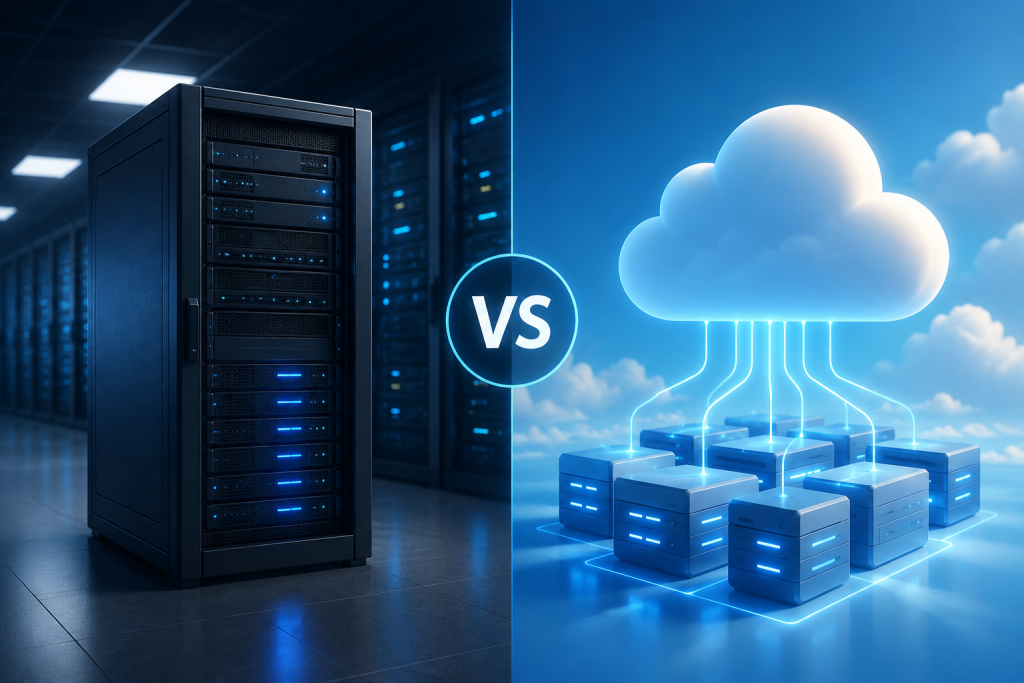
Dedicated servers provide exclusive hardware resources and complete control, while cloud hosting offers scalability, flexibility, and on-demand resource allocation. HostingSource helps businesses choose the right hosting solution based on performance requirements, security needs, and growth objectives.
When businesses outgrow shared hosting, one of the biggest decisions they face is choosing between a dedicated server and cloud hosting. Both solutions offer significant advantages over traditional hosting environments, but they serve different business needs.
Understanding the differences between these hosting models can help organizations make better infrastructure decisions while avoiding unnecessary costs and performance limitations.
HostingSource provides both dedicated server and cloud hosting solutions designed to support businesses of all sizes.
What Is a Dedicated Server?
A dedicated server is a physical server exclusively assigned to a single customer.
All resources are dedicated to one organization, including:
- CPU
- RAM
- Storage
- Bandwidth
Dedicated servers provide maximum control, performance, and customization.
What Is Cloud Hosting?
Cloud hosting uses a network of virtualized servers that work together to deliver computing resources.
Resources can be scaled up or down based on demand.
Cloud hosting typically provides:
- Flexible resource allocation
- High availability
- Rapid scalability
- Usage-based resource management
This makes cloud hosting attractive for businesses with changing workloads.
Dedicated Server vs Cloud Hosting: Key Differences
Resource Allocation
Dedicated Server:
Exclusive hardware resources.
Cloud Hosting:
Virtual resources allocated from a cloud environment.
Scalability
Dedicated Server:
Requires hardware upgrades for additional capacity.
Cloud Hosting:
Resources can often be increased instantly.
Performance
Dedicated Server:
Predictable performance with dedicated resources.
Cloud Hosting:
Strong performance but resources are virtualized.
Cost Structure
Dedicated Server:
Fixed monthly infrastructure costs.
Cloud Hosting:
Flexible resource consumption and scalability.
Infrastructure Control
Dedicated Server:
Full control over hardware and software configurations.
Cloud Hosting:
Less hardware-level control but easier management.
Benefits of Dedicated Servers
Maximum Performance
Dedicated resources provide consistent speed and reliability.
Full Administrative Control
Businesses can customize server environments to meet specific requirements.
Enhanced Security
Dedicated infrastructure offers greater isolation and control.
Ideal for Resource-Intensive Applications
Suitable for large databases, enterprise software, and high-traffic websites.
Benefits of Cloud Hosting
Easy Scalability
Resources can expand quickly as demand grows.
High Availability
Cloud environments often include redundancy and failover capabilities.
Reduced Infrastructure Management
Cloud providers manage much of the underlying infrastructure.
Flexible Growth
Businesses can adapt resources based on workload requirements.
When to Choose a Dedicated Server
A dedicated server may be the best option for:
- Enterprise applications
- Large ecommerce websites
- High-traffic platforms
- Compliance-sensitive workloads
- Custom software environments
- Resource-intensive databases
Businesses that require predictable performance and complete control often prefer dedicated hosting.
When to Choose Cloud Hosting
Cloud hosting may be the better option for:
- Growing businesses
- SaaS applications
- Development environments
- Remote work infrastructure
- Businesses with variable traffic patterns
- Organizations seeking rapid scalability
Cloud hosting works well when flexibility and scalability are priorities.
Why Businesses Choose HostingSource
HostingSource provides hosting solutions designed to meet diverse business requirements.
Their services include:
- Dedicated server hosting
- Cloud hosting solutions
- Managed hosting support
- Backup and disaster recovery
- Security services
- Infrastructure monitoring
- Technical support
HostingSource helps businesses select the right hosting environment based on operational needs and growth goals.
Common Business Use Cases
Dedicated Servers
- Financial platforms
- Healthcare applications
- Enterprise software
- Large-scale ecommerce stores
- Media and streaming platforms
Cloud Hosting
- Business websites
- SaaS platforms
- Startups
- Development projects
- Collaborative cloud applications
Best Practices for Choosing Hosting Infrastructure
Evaluate Performance Requirements
Understand your application’s CPU, RAM, and storage needs.
Consider Future Growth
Choose a solution that supports long-term scalability.
Review Security Requirements
Consider compliance, data sensitivity, and access controls.
Assess Budget Constraints
Compare infrastructure costs and management requirements.
Plan for Disaster Recovery
Ensure backups and recovery solutions are part of your infrastructure strategy.
Conclusion
Dedicated servers and cloud hosting both offer powerful hosting environments, but the right choice depends on your business objectives.
Dedicated servers provide maximum performance, control, and security, while cloud hosting delivers flexibility, scalability, and simplified infrastructure management.
HostingSource offers both dedicated server and cloud hosting solutions to help businesses build secure, scalable, and high-performing digital environments.
Choosing the right hosting strategy today can help support growth, improve performance, and strengthen long-term operational stability.
Frequently Asked Questions
What is the difference between dedicated servers and cloud hosting?
Dedicated servers provide exclusive hardware resources, while cloud hosting uses virtualized resources from a cloud environment.
Which is better for high-traffic websites?
Dedicated servers often provide more predictable performance for consistently high traffic.
Is cloud hosting more scalable?
Yes. Cloud hosting allows businesses to scale resources more quickly and easily.
Does HostingSource offer both dedicated and cloud hosting?
Yes. HostingSource provides dedicated servers, cloud hosting solutions, managed support, and infrastructure services.